
LEARNING
SKILL
How to Learn Braiding as a Beginner
This guide is for anyone who wants to learn braiding seriously, whether you’re starting from zero or teaching yourself as you go.
Whether you’re learning for yourself, your children, creative styling, festivals, or as a skill you may one day use professionally, the foundations are the same.
This isn’t a course, and it won’t make you an expert overnight. What it will do is remove confusion, explain how braiding skill is actually developed, and help you decide whether this is something you want to pursue with intention.
You don’t need talent, speed, or perfection. You need the right fundamentals, consistent practice, and clarity around what actually matters.
Learning braiding isn’t difficult, but it does require the right approach.
Most beginners struggle not because they lack ability, but because they start in the wrong order. They try to learn too many styles at once, buy too many tools, or compare their early practice to experienced work online. That usually leads to frustration and quitting.
This guide is designed to give you a clear starting point. It shows you what to focus on first, what to ignore for now, and how braiding skill is built over time, so you’re not guessing your way through the process.
If you’re willing to simplify, practise consistently, and focus on foundations before variety, progress becomes much easier to track.
Respecting the Craft
Braiding is often underestimated and undervalued because it looks simple when done well.
In many cultures, especially African communities, it has traditionally been learned informally, through observation and repetition. Because of that, the skill itself is sometimes overlooked, even though it requires coordination, patience, technical understanding, and care.
You don’t need a cultural background in braiding to approach it properly. What matters is how you treat the process. Taking the time to learn foundations, practise deliberately, and value improvement over speed is what leads to skill-building.
This guide is grounded in that mindset. Not rushing. Not copying without understanding. Just learning something properly and giving it the respect it deserves.
Before You Start: A Few Things You Should Know
My Path Into Braiding (And Why I Teach It This Way)

I didn’t grow up believing braiding was something I could learn. I went to an all-girls school where hair had to be cornrowed neatly or cut short, and even then, I struggled to braid my own hair. At university, I watched a close friend braid me and paid attention to her hands, but it never occurred to me that this was a skill I could rely on myself.
After completing my Master’s degree in Ireland and facing visa uncertainty, I began braiding friends’ hair in my flat to support myself. I found early clients through Facebook Marketplace and improved through constant practice. I watched videos late at night, often without fully understanding what I was seeing, and learned through repetition, trial, and mistakes.
Over time, practice replaced guesswork. What once felt unfamiliar became consistent.
Today, I run Fab Xtensions, a premium braiding studio based in Dublin, and I’ve supported beginners, students, and organisations in building real braiding skill from the ground up. Fab Braiders Academy exists to shorten the learning curve I went through and give people clarity, structure, and long-term direction.
That process is what this guide is built on.
What I learned through experience is that progress becomes much easier when you know what to focus on first.
What Actually Matters at the Start (Read This Before You Buy Your Tools)
Before tools, clients, or Instagram, there are a few things every beginner needs to understand.
Most people I speak to want to learn several styles at once, cornrows, knotless, stitch braids, twists, box braids. It sounds logical, but it’s not how skill is built.
Braiding works best when you simplify first.
The Foundations to Focus On
If you keep these consistent, everything else becomes easier:
hand placement and consistency
clean parting before style variety
repetition over perfection
understanding tension instead of forcing neatness
practising fewer things, more intentionally
If you get these right early, progress becomes predictable and easier.

Truth #1: You Only Need One Style to Begin
You can’t learn six styles at the same time. You learn one properly, and the others become easier because of it.
When you focus on a single braid style, your hands start to understand movement, tension, and technique. Those fundamentals transfer naturally into other styles later.
Starting small isn’t limiting. It’s efficient.
Truth #2: Skill Comes Before Speed
Speed is the result of consistent practice, not a starting point.
When you practise slowly and deliberately, your hands develop control and coordination. With repetition, speed improves on its own. Trying to move fast too early usually leads to uneven tension and inconsistent results.
Truth #3: Consistency Comes Before Looking Professional
You don’t need perfect photos, branding, or polished results to begin.
What matters is showing up regularly and practising with intention. Clean work comes from repetition, not pressure. Neatness improves as familiarity increases.
Truth #4: Feeling Awkward Is Part of Learning
Everyone feels awkward at the start. Sections aren’t clean yet. Movements don’t flow. You swear that your hands are conspiring against you.
That discomfort doesn’t mean you’re doing something wrong. It means your hands are learning something new.

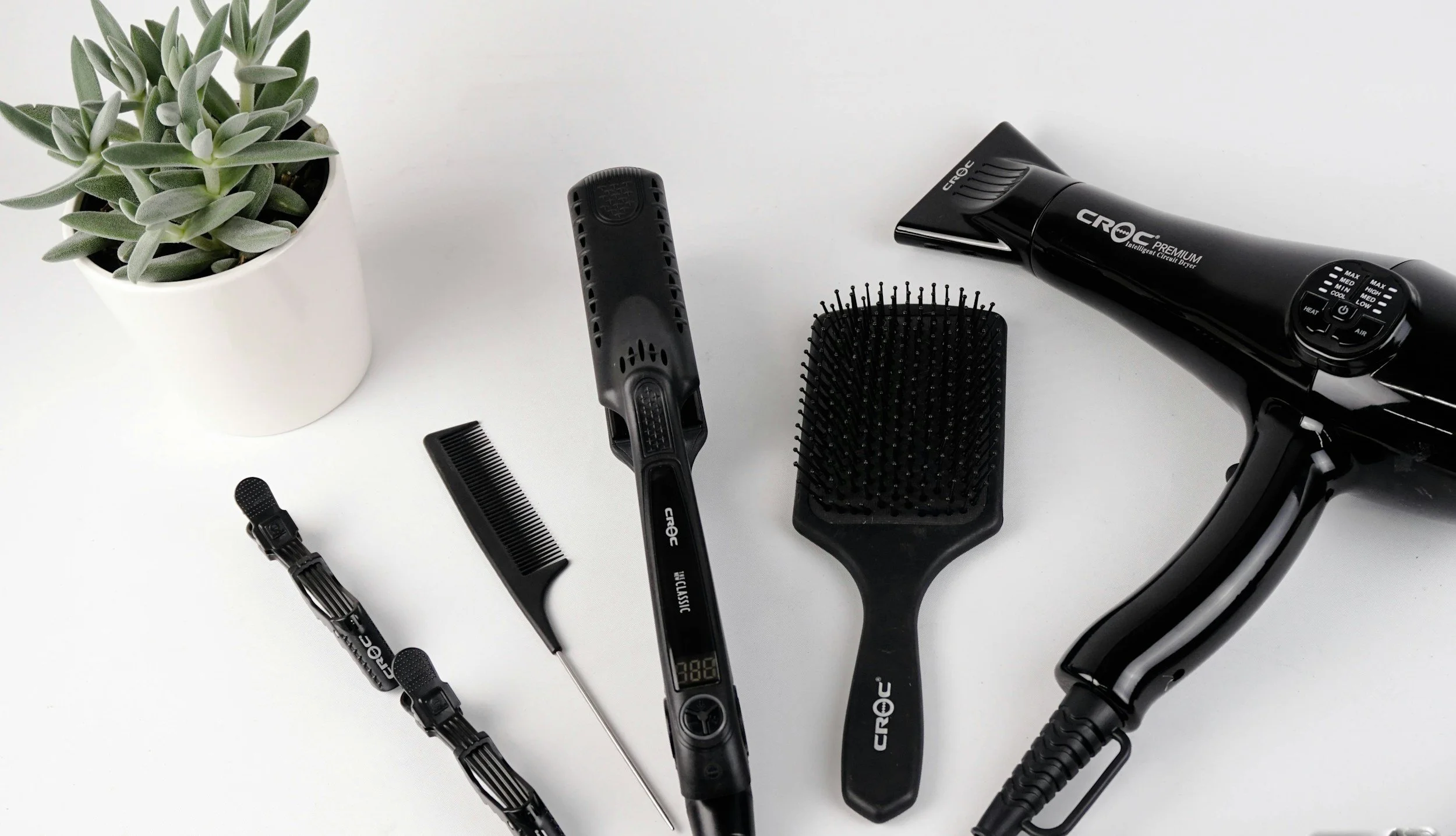
Tools - Your Minimum Viable Braiding Kit
You don’t need to buy everything you see online. Starting with too many tools usually slows beginners down and creates distractions.
What matters at the beginning is having a small, reliable setup that allows you to practise consistently without friction.
Essentials:
Rat-tail combs
Sectioning clips
A reliable braiding gel
Basic braiding hair (neutral colours)
Elastic bands
Mannequin head + tripod
These are the tools I recommend for beginners.
H2: Your 30-day practice plan (exact weekly focus)
H2: How to get practice clients ethically (without embarrassment)
H2: Pricing and positioning basics (beginner-friendly, confidence-first)
H2: Content that doesn’t feel cringe (simple phone setup + posting rhythm)
H2: Common beginner mistakes (and how to avoid them)
H2: The pathway (Free Hub → Academy → paid training/support)
The 30-day practice framework
how to think about practice
what weeks are for (not drills)
Practice clients + mindset
ethical, pressure-free approaches
boundaries and expectations
The pathway forward
what happens next
when the Academy makes sense
Option A, Keep learning casually (free):
Keep practising with the 30-day framework and revisit the tools list when you’re ready.
[Optional link: Tools list / Shop My Kit]
Option B, Learn with structure (Academy):
If you want step-by-step progression and guided practice, join Fab Braiders Academy.
[LINK: Academy]
Option C, Get personalised direction (1:1):
If you want a personalised practice plan based on your goal (self, kids, festivals, or professional), book a Braiding Clarity Session.
[LINK: 1:1]